Spoon's Audio Guide: Audio Channels
An audio channel is a single, discrete stream of audio information. The most commonly audio channel is stereo, that is two audio channels. Whilst most playback systems will have two speakers, including headphones, and stereo recordings map 1:1 to the speakers, a crucial distinction: an audio channel is not the same as a speaker, the playback system might have more speakers, such as 5 speakers, more than the recording which could be stereo.
C.L.H Naming Convention
A common way of representing audio channels as C.L.H:
- C (Surround Channels) Number of speakers at ear-level (Left, Right, Centre, Surrounds)
- L (LFE Channels) Low-Frequency Effects channels (Subwoofers)
- H (Height Channels) Number of overhead or upward-firing speakers (used in Dolby Atmos/Immersive audio)
If one is missing then the naming ends if nothing follows, otherwise it is zero, for example:
- Just stereo: 2
- Five surround and one LFE: 5.1
- Five surround, no LFE and 2 height: 5.0.2
Common Channel Configurations
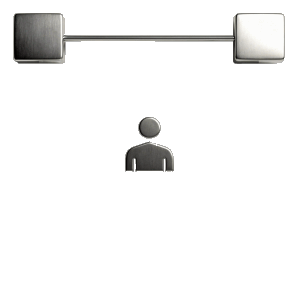
Mono (1 channel)
|
- Layout A single source
- History Standard for phonographs, AM radio, and early film
- Usage Phone calls, audiobooks, and checking music mixes for phase compatibility. Phantom Center is when a mono signal is played through two stereo speakers, the sound appears to come from directly between them
|
Stereo (2 channels)
|
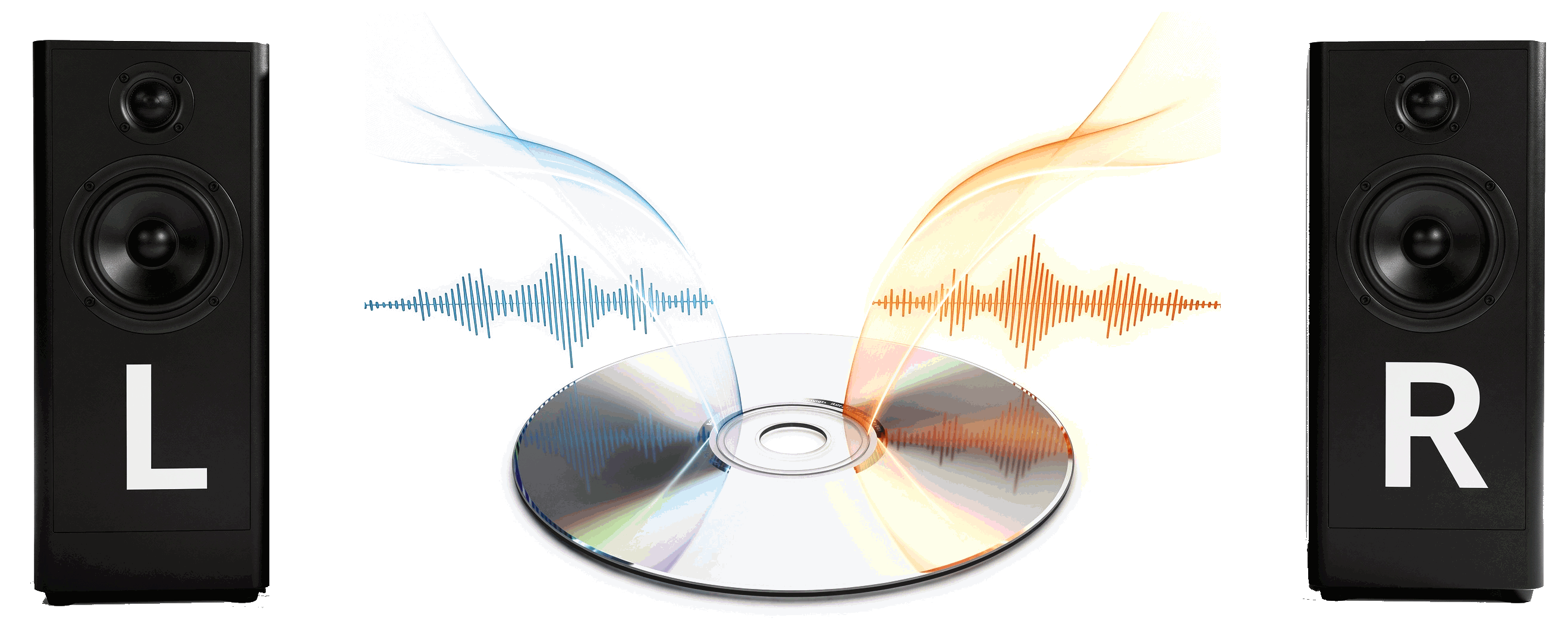
- Layout Two independent channels: Left (L) and Right (R)
- History Mimics human hearing (two ears). By varying the volume (level) and timing of a sound between L and R, a "Soundstage" is created, allowing the listener to localize instruments horizontally
- Usage Absolute standard for music, vinyl, streaming, and TV
|
Stereo + LFE (2.1)
|
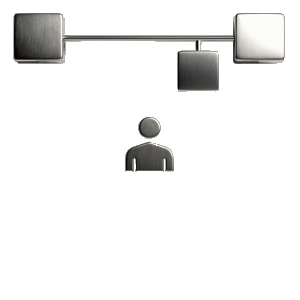
- Layout Left [L] and Right [R] with a Subwoofer [LFE]
- Concept Adds extra bass to music
- Usage Music, vinyl, streaming, and TV
|
Quadraphonic (4)
|
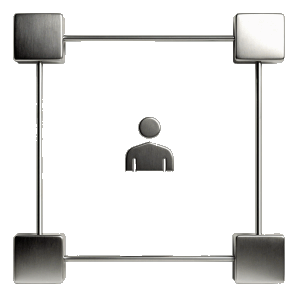
- Layout Left [L], Right [R], Left Rear [Lr], Right Rear [Rr]
- History Popular briefly in the 1970s. It failed due to competing, incompatible formats, but laid the groundwork for modern surround sound
- Usage
|
Surround Sound (5.1)
|
- Layout Left [L] & Right [R] (Music and sound effects), Center [C] (anchors dialogue to the screen, 70-80% of film audio), Left Surround [Ls] & Right Surround [Rs] (side/rear for ambience and directional effects), LFE [.1] (Low-Frequency Effects)
- Usage DVD, Blu-ray, Netflix, Digital Broadcast TV
|
Surround (7.1)
|
- Layout Adds two Rear Surround speakers to the 5.1 setup
- Usage Breaks the surround field into "Side" and "Rear," allowing for smoother panning of sounds moving from front to back
|
Immersive Audio (3D Audio) (5.1.2, 7.1.2, 5.1.4, 7.1.4)
|
Additional speakers are added above the listener. Traditional surround sound is Channel-Based (sound is mixed specifically to the "Left Surround" speaker). Modern immersive audio is Object-Based, commercial names are Dolby Atmos / DTS:X.
An audio engineer places a sound "object" (e.g., aeroplane) in 3D space using coordinates. The playback processor (receiver) calculates which speakers to use to create that sound based on the user's specific room setup.
|
Headphone Binaural Audio (2)
|
This is a technique to simulate 3D surround sound using only standard stereo headphones. Audio is recorded using a dummy head with microphones inside the "ears." It captures the timing and frequency reflections caused by the shape of the human ear.
When listened to on headphones, the brain is tricked into thinking sound is coming from behind or above, without needing extra speakers.
|
LFE Channel (.1) vs. Subwoofers
There is a common misconception regarding the ".1" in audio.
- LFE (Low-Frequency Effects) This is a specific channel of content found in movie soundtracks. It contains loud, deep bass (explosions, rumbles) specifically designed for a subwoofer. It usually covers frequencies below 120Hz.
- Bass Management If you have small speakers that cannot play bass, your receiver takes the bass from the main channels (L/R) and redirects to a subwoofer.
Psychoacoustics: How We Perceive Channels
People have two ears, yet are able to decode complex channel arrangements, via:
- ITD (Interaural Time Difference) If a sound hits the left ear 0.5 milliseconds before the right ear, the brain calculates the sound is coming from the left. Conversely, if hits the right ear 0.5ms before the left then the sound is from the right.
- ILD (Interaural Level Difference) If the same sound is louder in one ear, the brain perceives it as coming from that side.
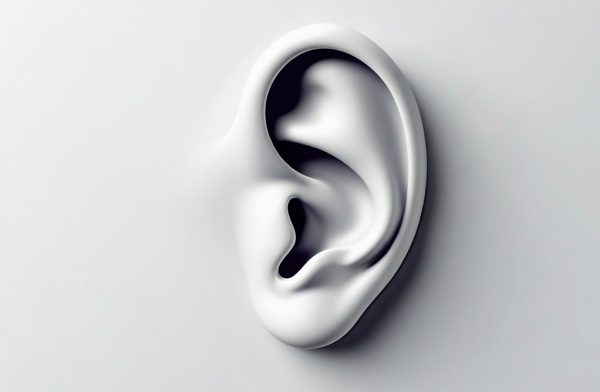
- HRTF (Head-Related Transfer Function) The shape of your outer ear (pinna), head, and shoulders changes the frequency response of sounds coming from behind or above you. This spectral filtering tells your brain the elevation of a sound.
Channels in Music Production (Signal Flow)
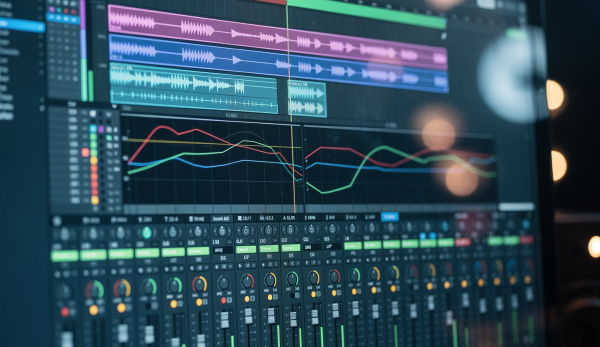
In a Digital Audio Workstation (DAW) Channel refers to the signal path.
- Input Channel Raw signal coming from a microphone or instrument
- Bus Channel A virtual pathway used to route audio from one place to another
- Group / Submix Channel Multiple channels (e.g., Kick, Snare, Hats) are routed to a single stereo "Drum Bus" fader to control their volume simultaneously
- Auxiliary (Aux) Channel Used for parallel processing. You send a copy of the vocal to an Aux channel containing Reverb. The original vocal stays dry; the Aux channel plays the reverb
- Master Channel The final summing point where all audio creates the stereo (or surround) mix file
Stereo is the most common audio format, stereo field is often visualized as a 3D box. The X-axis is Left-to-Right (Panning), the Y-axis is Height (Frequency), and the Z-axis is Depth (Volume and Reverb).
This placement isn't random; it is based on historical physical limitations (vinyl records) and psychoacoustics. Within music production the following placements traditionally take place:
Center (The Anchors)
Although stereo comprises two speakers, the most important element is the Phantom Center — illusion that sound is coming from the dead center, this is achieved by having the same signal in both left and right channels. In almost all modern genres (Pop, Rock, Hip Hop, EDM), the following are strictly centered:
- Lead Vocals Placed center to command attention. It mimics the way we speak to people face-to-face
- Kick Drum & Bass Guitar Low frequencies require the most energy to reproduce. By splitting the bass equally between the Left and Right speakers, the workload is shared, allowing for a louder mix.
On vinyl records, the needle vibrates horizontally for the stereo signal. If loud bass was panned hard Left, the needle could physically jump out of the groove. Therefore, bass was summed to mono (center) to keep the needle stable. This practice remains the standard today.
- Snare Drum Usually centered to provide a solid rhythmic backbone, though ghost notes or jazz snares may drift slightly
Sides (Width and Texture)
To stop the center from getting cluttered, harmony and textural instruments are pushed to the sides.
- Guitars & Synths
Hard Panning: A common rock technique is "Double Tracking." The guitarist plays the exact same riff twice. Take 1 is panned 100% Left; Take 2 is panned 100% Right. This creates a massive "wall of sound" while leaving the center open for the vocals.
Hi-Hats & Cymbals: usually panned slightly to one side (30-50%) to mimic the width of a drum kit.
- Backing Vocals Often recorded in pairs and panned hard L/R. This makes the chorus feel "wider" and "bigger" than the verses, "hugging" the lead vocal without fighting it for space.
Classical - Orchestral Positioning
Classical recordings generally ignore "studio tricks" and focus on realism. They pan instruments based on the traditional seating arrangement of an orchestra:
- Left First Violins
- Center-Left Second Violins, Harp
- Center Violas, Woodwinds
- Center-Right Cellos
- Right Double Basses
Audio Compression and Channels
For mp3, opus and other lossy compressed formats, every bit of the allocated bitrate is important, if there are efficiencies which can be gained through duplication then it should be used. We have learnt that often audio is split across channels.
If a 128kbps lossy file treated each channel as independent, then 64kbps would be allocated to the left channel and 64kbps to the right. That is a waste of bits, as left and right channels are roughly 90% identical.
Enter Joint Stereo coding, which takes advantage of the similarities, which typically utilizes two main techniques: Mid/Side Coding and Intensity Stereo:
- Mid/Side (M/S) Coding A lossless mathematical transformation to eliminate redundancy. Instead of encoding L and R separately, the encoder calculates Mid and Side.
Mid (Sum) L + R channels, everything that is the same in both — Vocals, kick, bass
Side (Difference) L − R, everything that is unique to the sides—Reverb, wide guitars, stereo effects
In a typical pop song, the Mid channel holds complex, loud information. The Side channel is usually much quieter and contains less important data.
The encoder can now be smart: It might allocate 110kbps to the Mid channel (to make the vocals and drums sound crisp) and only 18kbps to the Side channel (because the reverb doesn't need high fidelity).
Reconstruction: Upon playback, the decoder simply reverses the math, Left = (Mid + Side) / 2 Right = (Mid − Side) / 2
- Intensity Stereo Destructive coding, Intensity Stereo is a psychoacoustic trick used at low bitrates.
People are bad at telling the directionality (stereo location) of high frequencies. We mostly detect the direction of high sounds based on their "envelope" (loudness), not the phase, so the encoder takes high frequencies and merges left and right to a single mono stream. In addition it adds markers, such as "These frequencies are a bit louder on the left" or "These are louder on the right."
The high notes are played in mono, but turns the volume knob up and down rapidly on the L or R speaker to simulate stereo, which creates the "swishy" or "underwater" sound of low-quality MP3s. It destroys the phase information, making the audio feel unnatural, but it saves massive amounts of data.
Continuation of Audio Guide
Copyright © illustrate 2026, All Rights Reserved